
Our Approach
At TACCEI, we believe that the survival of Tanzania’s iconic ecosystems depends entirely on the resilience of the people who call them home. Traditional, top-down conservation models often isolate communities from the natural resources they depend on, creating conflict and unsustainable dependencies.
We do things differently. TACCEI operates at the intersection of scientific research, indigenous knowledge, and socio-economic empowerment. We transform local communities from passive bystanders into active, highly equipped landscape stewards.
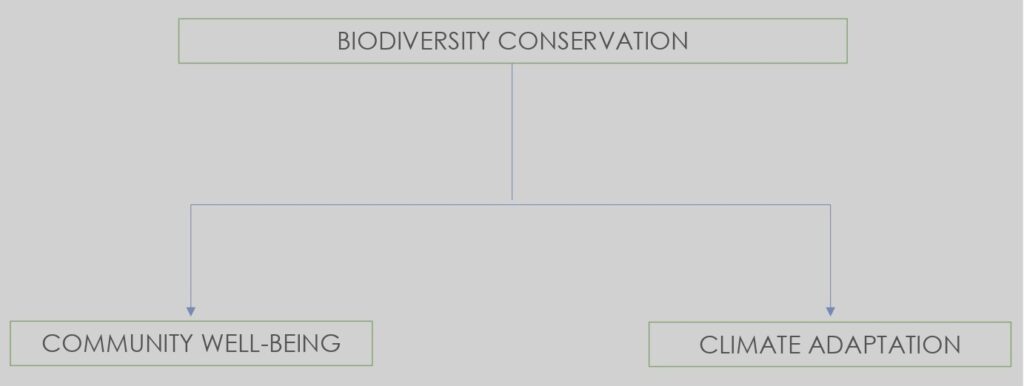
We deliver long-term conservation impact through a unique three-tiered methodology:
Community-Driven Co-Design
We do not impose external solutions. Guided by the principles of Free, Prior, and Informed Consent (FPIC), we design every intervention in direct partnership with traditional governance structures and local communities. By integrating modern ecological science with centuries of local ecological knowledge, we create solutions that are culturally grounded, highly respected, and built to last.
Nature-Positive Socio-Economic Innovation
To sustainably conserve biodiversity, we must eliminate the economic vulnerabilities that drive ecosystem degradation. We create tangible, financial incentives for conservation. Whether through building predator-proof infrastructure to protect pastoralist wealth, launching school-led tree nurseries, or funding eco-entrepreneurship, we ensure that protecting ecosystems is more economically viable than exploiting them.
Institutional & Policy Scale
We ensure grassroots impact has a national footprint. By training youth leaders and local advocates, we bridge the gap between remote villages and national policy circles. We build the capacity of local institutions to govern their own natural resources, ensuring that community voices structurally shape the future of environmental planning in Tanzania.
Why invest in our approach?
Investing in our approach means investing in a high-leverage, community-rooted model where environmental restoration and economic resilience scale together. By leveraging existing local infrastructure such as public schools for modern tree nurseries and traditional governance networks for rangeland management, we minimize operational overhead and maximize direct field impact. Our approach explicitly transforms local communities from passive beneficiaries into financed, legally recognized landscape stewards.